
Granit se yon kalite wòch igney yo ekstrè pou fòs ekstrèm li, dansite li, dirabilite li, ak rezistans li a korozyon. Men granit tou trè versatile - li pa sèlman pou kare ak rektang! Anfèt, nou travay avèk konfyans ak konpozan granit ki fèt nan fòm, ang, ak koub nan tout varyasyon sou yon baz regilye - ak rezilta ekselan.
Through our state of the art processing, cut surfaces can be exceptionally flat. These qualities make granite the ideal material to create custom-size and custom-design machine bases and metrology components. Granite is:
■ machinabl
■ egzakteman plat lè koupe epi fini
■ reziste rouye
■ dirab
■ ki dire lontan
Konpozan granit yo fasil pou netwaye tou. Lè w ap kreye desen pèsonalize, asire w ou chwazi granit pou avantaj siperyè li yo.
ESTANDA / APLIKASYON KI SOURI AN GWO
Granit ZHHIMG itilize pou pwodwi plak sifas estanda nou yo gen yon gwo kontni kwatz, ki bay pi gwo rezistans kont mete ak domaj. Koulè Nwa Siperyè nou yo gen yon to absòpsyon dlo ki ba, sa ki minimize posiblite pou kalib presizyon ou yo wouye pandan y ap mete sou plak yo. Koulè granit ZHHIMG ofri yo lakòz mwens ekla, ki vle di mwens fatig je pou moun k ap itilize plak yo. Nou chwazi kalite granit nou yo pandan n ap konsidere ekspansyon tèmik la nan yon efò pou kenbe aspè sa a minim.
CUSTOM APPLICATIONS
Lè aplikasyon w lan mande yon plak ak fòm pèsonalize, foure filete, fant oswa lòt machinasyon, ou pral vle chwazi yon materyèl tankou Nwa Jinan Nwa. Materyèl natirèl sa a ofri yon rèd siperyè, yon ekselan rediksyon vibrasyon, ak yon pi bon machinabilite.
Li enpòtan pou nou sonje koulè poukont li pa yon endikasyon kalite fizik wòch la. An jeneral, koulè granit la gen yon rapò dirèk ak prezans oswa absans mineral, ki ka pa gen okenn enpak sou kalite ki fè yon bon materyèl pou plak sifas. Gen granit woz, gri ak nwa ki ekselan pou plak sifas, ansanm ak granit nwa, gri ak woz ki pa apwopriye ditou pou aplikasyon presizyon. Karakteristik kritik granit la, jan yo gen rapò ak itilizasyon li kòm yon materyèl pou plak sifas, pa gen anyen pou wè ak koulè, epi yo se jan sa a:
■ Rijidite (defleksyon anba chaj - endike pa Modil Elastisite)
■ Dite
■ Dansite
■ Rezistans mete
■ Estabilite
■ Porosite
Nou teste anpil materyèl granit epi nou konpare materyèl sa yo. Finalman nou jwenn rezilta a, granit nwa Jinan se pi bon materyèl nou te janm konnen. Granit nwa Endyen an ak granit Sid Afriken an sanble ak Granit Nwa Jinan an, men pwopriyete fizik yo pi ba pase Granit Nwa Jinan an. ZHHIMG ap kontinye chèche plis materyèl granit nan mond lan epi konpare pwopriyete fizik yo.
Pou pale plis sou granit ki bon pou pwojè w la, tanpri kontakte nou.info@zhhimg.com.
Diferan manifakti yo itilize diferan estanda. Gen anpil estanda nan mond lan.
DIN Standard, ASME B89.3.7-2013 oubyen Federal Specification GGG-P-463c (Granite Surface Plates) ak sou sa kòm baz pou espesifikasyon yo.
Epi nou ka fabrike plak enspeksyon presizyon granit selon bezwen ou yo. Byenveni nan kontakte nou si ou vle konnen plis enfòmasyon sou plis estanda.
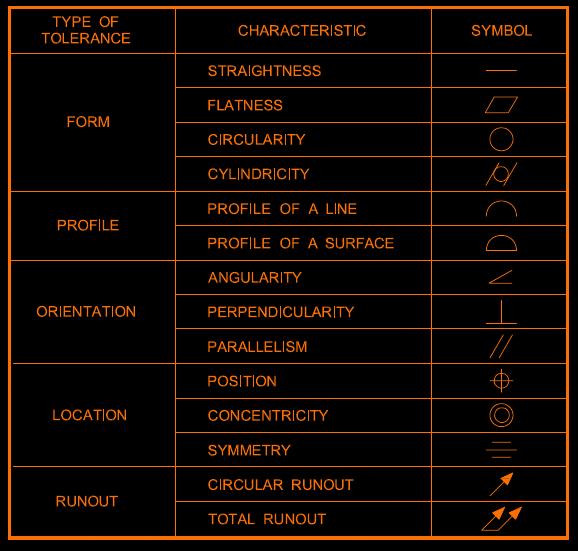
Yo ka konsidere planite kòm tout pwen sou sifas la ki nan de plan paralèl, plan baz la ak plan twati a. Mezi distans ki genyen ant plan yo se planite jeneral sifas la. Mezi planite sa a souvan gen yon tolerans epi li ka gen ladan yon deziyasyon klas.
Pa egzanp, tolerans planite pou twa klas estanda yo defini nan spesifikasyon federal la jan fòmil sa a detèmine sa:
■ Klas Laboratwa AA = (40 + dyagonal kare/25) x .000001" (inilateral)
■ Enspeksyon Klas A = Klas Laboratwa AA x 2
■ Sal Zouti Klas B = Laboratwa Klas AA x 4.
Pou plak sifas gwosè estanda, nou garanti tolerans planè ki depase egzijans spesifikasyon sa a. Anplis planè, ASME B89.3.7-2013 & Spesifikasyon Federal GGG-P-463c abòde sijè tankou: presizyon mezi repetisyon, pwopriyete materyèl granit plak sifas, fini sifas, kote pwen sipò, rèd, metòd enspeksyon akseptab, enstalasyon foure filete, elatriye.
Plak sifas granit ZHHIMG yo ak plak enspeksyon granit yo satisfè oswa depase tout egzijans ki tabli nan spesifikasyon sa a. Kounye a, pa gen okenn spesifikasyon definitif pou plak ang granit, paralèl, oswa kare prensipal.
Epi ou ka jwenn fòmil pou lòt estanda yo nanTELECHAJE.
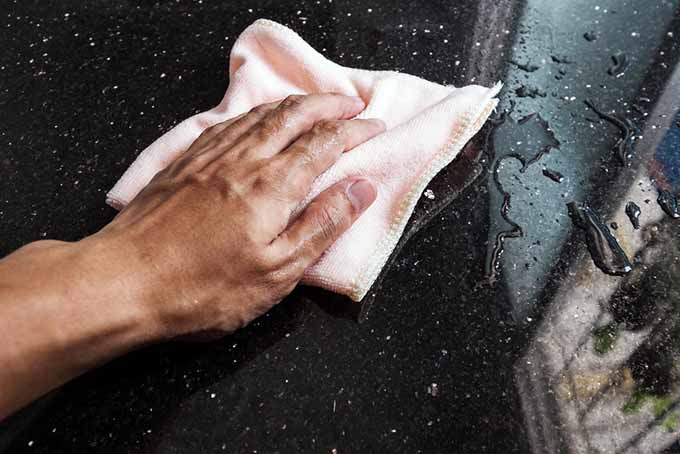
Premyèman, li enpòtan pou kenbe plak la pwòp. Pousyè abrazif ki nan lè a anjeneral se pi gwo sous itilizasyon sou yon plak, paske li gen tandans rantre nan pyès travay yo ak sifas kontak kalib yo. Dezyèmman, kouvri plak ou a pou pwoteje l kont pousyè ak domaj. Ou ka pwolonje lavi li lè w kouvri plak la lè w pa ap itilize l, lè w vire plak la detanzantan pou yon sèl zòn pa sibi twòp itilizasyon, epi lè w ranplase kousinen kontak asye sou kalib yo ak kousinen kabid. Epitou, evite mete manje oswa bwason gazez sou plak la. Remake byen ke anpil bwason gazez genyen swa asid kabonik oswa asid fosfòrik, ki ka fonn mineral ki pi mou yo epi kite ti twou sou sifas la.
Sa depann de kijan w ap itilize plak la. Si posib, nou rekòmande pou netwaye plak la nan kòmansman jounen an (oswa lè w ap travay) epi ankò nan fen an. Si plak la vin sal, sitou ak likid ki gen lwil oswa ki kolan, li ta dwe netwaye imedyatman.
Netwaye plak la regilyèman avèk likid oswa pwodui netwayaj plak sifas san dlo ZHHIMG. Chwa solisyon netwayaj yo enpòtan. Si w itilize yon sòlvan temèt (asetòn, diluan lak, alkòl, elatriye) evaporasyon an ap refwadi sifas la epi defòme li. Nan ka sa a, li nesesè pou kite plak la vin nòmal anvan w itilize li, sinon erè mezi ap rive.
Kantite tan ki nesesè pou plak la vin nòmal ap varye selon gwosè plak la, ak kantite refwadisman ki nesesè a. Inèdtan ta dwe sifi pou plak ki pi piti yo. De zèdtan ka nesesè pou plak ki pi gwo yo. Si yo itilize yon pwodui netwayaj ki fèt ak dlo, pral gen yon ti refwadisman evaporatif tou.
Plak la ap kenbe dlo a tou, e sa ka lakòz wouy nan pati metal ki an kontak ak sifas la. Gen kèk pwodui netwayaj ki pral kite yon rezidi kolan apre yo fin seche, sa ki pral atire pousyè ki nan lè a, epi an reyalite ogmante usure, olye ke diminye li.
Sa depann de itilizasyon plak la ak anviwònman an. Nou rekòmande pou yon nouvo plak oswa yon akseswa granit presizyon resevwa yon rekalibrasyon konplè nan lespas yon ane apre acha a. Si plak sifas granit la pral sibi anpil itilizasyon, li ka rekòmande pou diminye entèval sa a a sis mwa. Enspeksyon chak mwa pou erè mezi repete lè l sèvi avèk yon nivo elektwonik, oswa yon aparèy menm jan an ap montre nenpòt tach mete k ap devlope epi li pran sèlman kèk minit pou fèt. Apre yo fin detèmine rezilta premye rekalibrasyon an, entèval kalibrasyon an ka pwolonje oswa diminye jan sistèm kalite entèn ou an pèmèt oswa egzije.
Nou ka ofri sèvis pou ede w enspekte epi kalibre plak sifas granit ou a.

Gen plizyè kòz posib pou varyasyon ant kalibrasyon yo:
- Yo te lave sifas la avèk yon solisyon cho oswa frèt anvan kalibrasyon an, epi yo pa t ba li ase tan pou l vin nòmal.
- Plak la pa byen sipòte
- Chanjman tanperati
- Bouyon
- Limyè solèy dirèk oswa lòt chalè radyan sou sifas plak la. Asire w ke limyè ki anlè tèt yo pa chofe sifas la.
- Varyasyon nan gradyan tanperati vètikal ant sezon ivè ak sezon ete (Si sa posib, konnen tanperati gradyan vètikal la lè kalibrasyon an ap fèt.)
- Plak la pa gen ase tan pou l vin nòmal apre chajman an.
- Move itilizasyon ekipman enspeksyon oswa itilizasyon ekipman ki pa kalibre
- Chanjman sifas ki soti nan mete
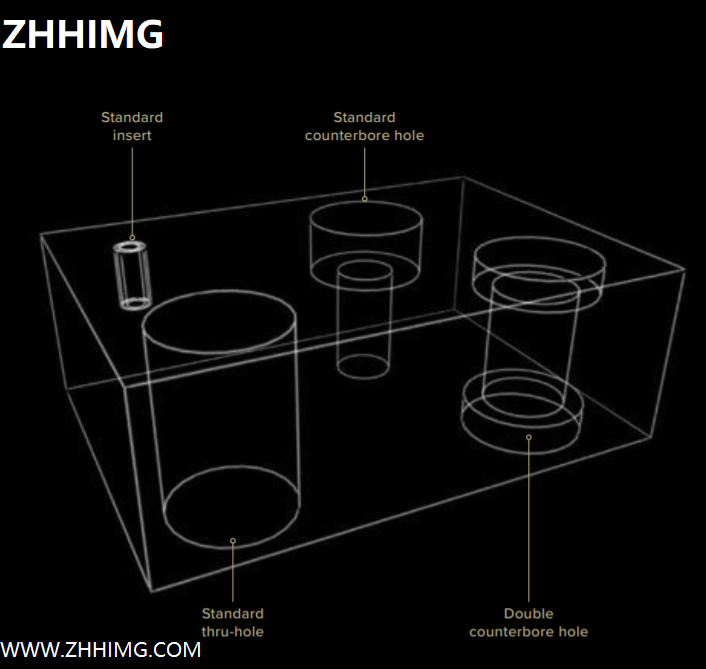
Konbyen kalite twou ki genyen sou granit presizyon?
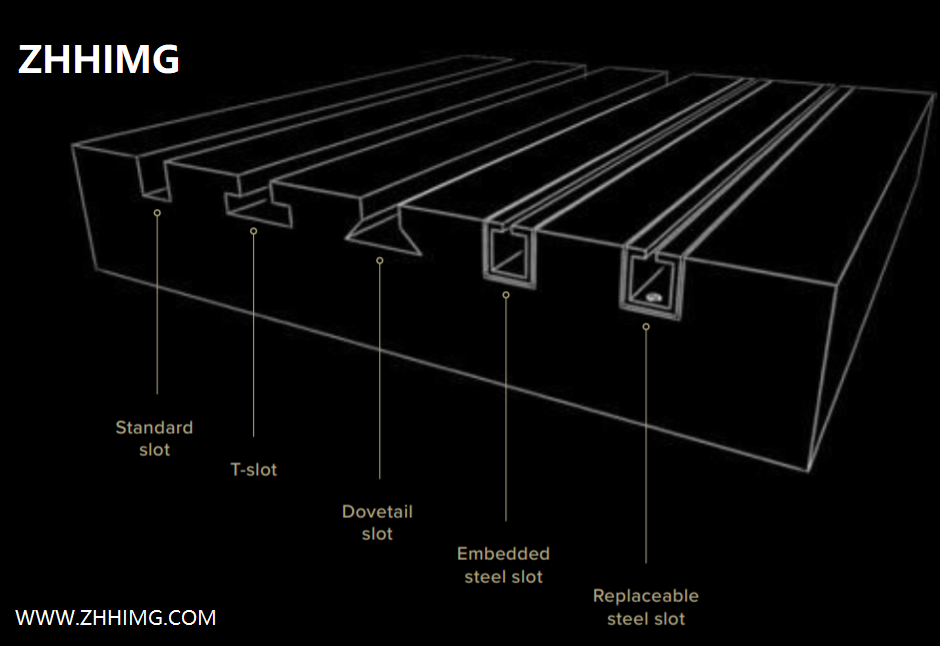
Fant sou Konpozan Granite Presizyon
Pou anpil faktori, chanm enspeksyon ak laboratwa, plak sifas granit presizyon yo konte sou yo kòm baz pou mezi egzat. Paske chak mezi lineyè depann de yon sifas referans egzat kote yo pran dimansyon final yo, plak sifas yo bay pi bon plan referans pou enspeksyon travay ak planifikasyon anvan machinasyon. Yo se tou baz ideyal pou fè mezi wotè ak sifas kalibraj. Anplis de sa, yon wo degre planite, estabilite, kalite jeneral ak atizan konn fè yo yon bon chwa pou monte sistèm kalibraj mekanik, elektwonik ak optik sofistike. Pou nenpòt nan pwosesis mezi sa yo, li enperatif pou kenbe plak sifas yo kalibre.
Repeat Measurements and Flatness
Ni planite a ni mezi repetitif yo enpòtan pou asire yon sifas presi. Planite ka konsidere kòm tout pwen sou sifas la ki genyen nan de plan paralèl, plan baz la ak plan twati a. Mezi distans ant plan yo se planite jeneral sifas la. Mezi planite sa a souvan gen yon tolerans epi li ka gen ladan yon deziyasyon klas.
The flatness tolerances for three standard grades are defined in the federal specification as determined by the following formula:
DIN Standard, GB Standard, ASME Standard, JJS standard... diferan peyi ak diferan kanpe...
In addition to flatness, repeatability must be ensured. A repeat measurement is a measurement of local flatness areas. It is a measurement taken anywhere on the surface of a plate that will repeat within the stated tolerance. Controlling local area flatness to a tighter tolerance than overall flatness guarantees a gradual change in surface flatness profile, thereby minimizing local errors.
Pou asire yon plak sifas satisfè tou de espesifikasyon planè ak repetisyon mezi yo, manifaktirè plak sifas granit yo ta dwe itilize Espesifikasyon Federal GGG-P-463c kòm yon baz pou espesifikasyon yo. Nòm sa a adrese presizyon mezi repetisyon, pwopriyete materyèl granit plak sifas, fini sifas, kote pwen sipò, rèd, metòd enspeksyon ak enstalasyon akseptab pou foure filete.
Checking Plate Accuracy
Lè w suiv kèk règ senp, yon envestisman nan yon plak sifas granit ta dwe dire plizyè ane. Tou depan de itilizasyon plak la, anviwònman atelye a ak presizyon ki nesesè a, frekans pou verifye presizyon plak sifas la varye. Yon règ jeneral se pou yon nouvo plak resevwa yon rekalibrasyon konplè nan yon ane apre acha. Si plak la itilize souvan, li rekòmande pou diminye entèval sa a a sis mwa.
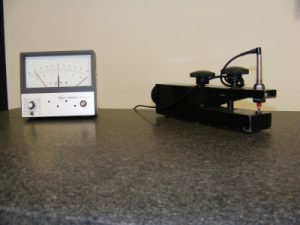
Before a surface plate has worn beyond specification for overall flatness, it will show worn or wavy posts. Monthly inspection for repeat measurement errors using a repeat reading gage will identify wear spots. A repeat reading gage is a high-precision instrument that detects local error and can be displayed on a high magnification electronic amplifier.
An effective inspection program should include regular checks with an autocollimator, providing actual calibration of overall flatness traceable to National Institute of Standards and Technology (NIST). Comprehensive calibration by the manufacturer or an independent company is necessary from time to time.
Variations Between Calibrations
Nan kèk ka, gen varyasyon ant kalibrasyon plak sifas yo. Pafwa faktè tankou chanjman sifas ki soti nan mete, move itilizasyon ekipman enspeksyon oswa itilizasyon ekipman ki pa kalibre ka eksplike varyasyon sa yo. Sepandan, de faktè ki pi komen yo se tanperati ak sipò.
One of the most important variables is temperature. For instance, the surface might have been washed with a hot or cold solution prior to calibration and not allowed sufficient time to normalize. Other causes of temperature change include drafts of cold or hot air, direct sunlight, overhead lighting or other sources of radiant heat on the surface of the plate.
There also can be variations in the vertical temperature gradient between winter and summer. In some cases, the plate is not allowed sufficient time to normalize after shipment. It is a good idea to record the vertical gradient temperature at the time the calibration is performed.
Another common cause for calibration variation is a plate that is improperly supported. A surface plate should be supported at three points, ideally located 20% of the length in from the ends of the plate. Two supports should be located 20% of the width in from the long sides, and the remaining support should be centered.
Only three points can rest solidly on anything but a precision surface. Attempting to support the plate at more than three points will cause the plate to receive its support from various combinations of three points, which will not be the same three points on which it was supported during production. This will introduce errors as the plate deflects to conform to the new support arrangement. Consider using steel stands with support beams designed to line up with the proper support points. Stands for this purpose are generally available from the surface plate manufacturer.
If the plate is properly supported, precise leveling is only necessary if an application specifies it. Leveling is not necessary to maintain the accuracy of a properly supported plate.
Extend Plate Life
Swiv kèk direktiv ap diminye mete sou yon plak sifas granit epi finalman, pwolonje lavi li.
Premyèman, li enpòtan pou kenbe plak la pwòp. Pousyè abrazif ki nan lè a anjeneral se pi gwo sous usure ak chire sou yon plak, paske li gen tandans rantre nan pyès travay yo ak sifas kontak kalib yo.
It also is important to cover plates to protect it from dust and damage. Wear life can be extended by covering the plate when not in use.
Vire plak la detanzantan pou yon sèl zòn pa sibi twòp itilizasyon. Epitou, li rekòmande pou ranplase kousinen kontak asye yo sou kalibrasyon an ak kousinen carbure.
Avoid setting food or soft drinks on the plate. Many soft drinks contain either carbonic or phosphoric acid, which can dissolve the softer minerals and leave small pits in the surface.
Where to Relap
Lè yon plak sifas granit bezwen yon nouvo sifas, konsidere si ou ta dwe fè sèvis sa a sou plas oswa nan sant kalibrasyon an. Li toujou pi preferab pou fè plak la refè nan faktori a oswa nan yon sant espesyal. Sepandan, si plak la pa twò ize, jeneralman nan 0.001 pous nan tolerans ki nesesè a, yo ka refè sifas li sou plas. Si yon plak ize jiska pwen kote li plis pase 0.001 pous deyò tolerans lan, oswa si li gen anpil twou oswa mak, lè sa a yo ta dwe voye l nan faktori a pou yo moulen l anvan yo refè sifas la.
A calibration facility has the equipment and factory setting providing the optimum conditions for proper plate calibration and rework if necessary.
Fòk ou pran anpil prekosyon lè w ap chwazi yon teknisyen kalibrasyon ak resifasaj sou plas. Mande akreditasyon epi verifye ekipman teknisyen an pral itilize a gen yon kalibrasyon trasabl. Eksperyans se yon faktè enpòtan tou, paske li pran plizyè ane pou aprann kijan pou sipèpoze granit presizyon kòrèkteman.
Critical measurements start with a precision granite surface plate as a baseline. By ensuring a reliable reference by using a properly calibrated surface plate, manufacturers have one of the essential tools for reliable measurements and better quality parts.Q
Checklist for Calibration Variations
1. Yo te lave sifas la avèk yon solisyon cho oswa frèt anvan kalibrasyon an epi yo pa t ba li ase tan pou l vin nòmal.
2. Plak la pa byen sipòte.
3. Chanjman tanperati.
4. Bouyon.
5. Limyè solèy dirèk oswa lòt chalè radyan sou sifas plak la. Asire w ke limyè ki anlè tèt yo pa chofe sifas la.
6. Varyasyon nan gradyan tanperati vètikal ant sezon ivè ak sezon ete. Si posib, konnen tanperati gradyan vètikal la nan moman kalibrasyon an ap fèt.
7. Plak la pa gen ase tan pou l retounen nòmal apre chajman an.
8. Move itilizasyon ekipman enspeksyon oswa itilizasyon ekipman ki pa kalibre.
9. Chanjman sifas ki soti nan mete.
Tech Tips
- Paske chak mezi lineyè depann de yon sifas referans egzat kote yo pran dimansyon final yo, plak sifas yo bay pi bon plan referans pou enspeksyon travay ak layout anvan machinasyon.
- Controlling local area flatness to a tighter tolerance than overall flatness guarantees a gradual change in surface flatness profile, thereby minimizing local errors.
- Yon pwogram enspeksyon efikas ta dwe gen ladan verifikasyon regilye ak yon otokolimateur, ki bay yon kalibrasyon reyèl sou planite jeneral la ki ka remonte jiska Otorite Enspeksyon Nasyonal la.
Pami patikil mineral ki fòme granit la, plis pase 90% se fèlspa ak kwats, epi fèlspa se pi plis la. Fèlspa a souvan blan, gri, ak wouj chè, epi kwats la sitou san koulè oswa blan gri, ki konstitye koulè debaz granit la. Fèlspa ak kwats se mineral ki di, epi li difisil pou deplase yo ak yon kouto asye. Kanta pou tach nwa yo nan granit la, sitou mika nwa, gen kèk lòt mineral. Malgre ke byotit relativman mou, kapasite li pou reziste estrès la pa fèb, epi an menm tan yo gen yon ti kantite nan granit la, souvan mwens pase 10%. Sa a se kondisyon materyèl kote granit la patikilyèman solid.
Yon lòt rezon ki fè granit solid se paske patikil mineral li yo byen lye youn ak lòt epi yo entegre youn ak lòt. Souvan, porositë yo reprezante mwens pase 1% nan volim total wòch la. Sa bay granit la kapasite pou reziste gwo presyon epi imidite pa fasil pou penetre.
Konpozan granit yo fèt ak wòch ki pa gen rouye, rezistans asid ak alkali, bon rezistans mete ak long lavi sèvis, pa bezwen antretyen espesyal. Konpozan presizyon granit yo sitou itilize nan zouti endistri machin. Se poutèt sa, yo rele yo konpozan presizyon granit oswa konpozan granit. Karakteristik konpozan presizyon granit yo fondamantalman menm jan ak sa yo ki nan platfòm granit yo. Entwodiksyon nan zouti ak mezi konpozan presizyon granit: Teknoloji machinasyon presizyon ak mikwo machinasyon se direksyon devlopman enpòtan nan endistri fabrikasyon machin, epi yo te vin tounen yon endikatè enpòtan pou mezire yon nivo gwo teknoloji. Devlopman teknoloji dènye kri ak endistri defans lan inséparabl de machinasyon presizyon ak teknoloji mikwo-machinasyon. Konpozan granit yo ka glise san pwoblèm nan mezi a, san stagnasyon. Mezi sifas travay, reyur jeneral pa afekte presizyon mezi a. Konpozan granit yo bezwen fèt ak pwodui dapre egzijans bò demann lan.
Jaden aplikasyon:
Jan nou tout konnen, pi plis machin ak ekipman ap chwazi konpozan granit presizyon.
Konpozan granit yo itilize pou mouvman dinamik, motè lineyè, cmm, cnc, machin lazè...
Byenveni nan kontakte nou pou plis enfòmasyon.
Aparèy mezi granit ak konpozan mekanik granit yo fèt ak granit nwa Jinan kalite siperyè. Akòz gwo presizyon yo, dire lontan yo, bon estabilite yo ak rezistans korozyon yo, yo pi plis itilize nan enspeksyon pwodwi nan endistri modèn ak nan domèn syantifik tankou espas ayewospasyal mekanik ak rechèch syantifik.
Avantaj
---- De fwa pi rèd pase fè jete;
---- Ti chanjman nan dimansyon yo akòz chanjman tanperati;
---- Pa gen tòde, kidonk pa gen entèripsyon nan travay;
---- Pa gen bav oswa protruzyon akòz estrikti grenn amann ak adezif ensiyifyan, ki asire yon wo degre de platite sou yon lavi sèvis ki long epi ki pa lakòz okenn domaj nan lòt pati oswa enstriman;
---- Operasyon san pwoblèm pou itilize ak materyèl mayetik;
---- Long lavi epi san rouye, sa ki lakòz depans antretyen ki ba.
Plak sifas granit presizyon yo sipèpoze avèk presizyon nan yon estanda ki wo nan planè pou reyalize presizyon epi yo itilize kòm baz pou monte sistèm mezi mekanik, elektwonik ak optik sofistike.
Kèk nan karakteristik inik plak sifas granit la:
Inifòmite nan dite;
Egzak anba kondisyon chaj;
Absòbe Vibrasyon;
Fasil pou netwaye;
Rezistan vlope;
Porosite ki ba;
Pa abrazif;
Non-mayetik
Avantaj plak sifas Granite a
First, the rock after a long period of natural aging, uniform structure, coefficient minimum, the internal stress completely disappear, not deformed, so the precision is high.
Voye Imèl
Skype
Anglè
Alman
Franse
Pòtigè
Panyòl
Japonè
Koreyen
Arab
Ilandè
Grèk
Tik
Italyen
Danwa
Womenyen
Endonezyen
Tchèk
Syèd
Polonè
Bask
Katalan
Espéranto
Hindi
Lao
Albanè
Amharik
Amenyen
Azerbaydjanyen
Belarisyen
PBengali
Bosnyen
Bilgaryen
Sebuano
Chichewa
Kòsik
Kwoasyen
Olandè
Estonyen
Filipin
Finnish
Frisyen
Galisyen
Jòjyen
Gujarati
Ayisyen
Aoussa
AwayenEbreHmong
OngwaIslandèIgbo
JavanèKannada
Kazak
Khmer
Kurd
Kirghiz
Latin
Letonyen
Lityanyen
Liksanbou..
Masedonyen
Malgach
Malay
Malayalam
Maltèz
Maori
Marathi
Mongolyen
Birman
Nepalè
Nòvejyen
Pachto
Pèsyen
Punjabi
Sèb
Sesotho
Sinhala
Slovak
- Slovenyen
- Somali
- Samoan
- Gaèlik Ekosè
- Shona
- Sindhi
- Soundanès
- Swahili
- Tajik
- Tamil
- Telugu
Thai
Ikrenyen
OurdouAOuzbèk2VyetnamyenLGalwaAXhosa
Yidich
Yoruba
Zoulou
Kinyarwanda
Tatar
Turkmen
Ouïgour
Chinwa
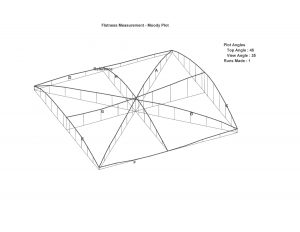
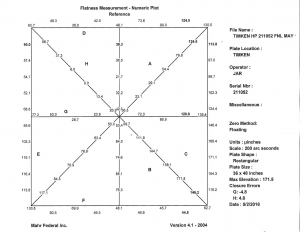
Routine surface plate calibration is necessary to ensure flatness and repeatability over time. The precision measurement group at Cross is ISO 17025 accredited for calibration of surface plate flatness and repeatability. We utilize the Mahr Surface Plate Certification System featuring:
- Moody and Profile Analysis,
- Isometric or Numeric plots,
- Multiple Run Average, and
- Automatic Grading According to Industry Standards.
The Mahr Computer Assisted Model determines any angular or linear deviation from absolute level, and is ideally suited for highly precise profiling of surface plates.
Intervals between calibrations will vary depending on the frequency of use, the environmental conditions where the plate is located, and the specific quality requirements of your company. Properly maintaining your surface plate may allow for longer intervals between each calibration, helps you avoid the added cost of relapping, and most importantly ensures the measurements you obtain on the plate are as accurate as possible. Although surface plates appear robust, they are precision instruments and should be treated as such. Here are some things to consider regarding care of your surface plates:
- Keep the plate clean, and if possible cover it when it is not in use
- Nothing should be placed on the plate other than gages or pieces to be measured.
- Don’t use the same spot on the plate every time.
- If possible, rotate the plate periodically.
- Respect the load limit of your plate
Precision Granite Base Can Improve Machine Tool Performances
Requirements are constantly increasing in mechanical engineering in general and in machine tool construction in particular. Achieving maximum precision and performance values without increasing costs are constant challenges to being competitive. The machine tool bed is a decisive factor here. Therefore, more and more machine tool manufacturers are relying on granite. Due to its physical parameters, it offers clear advantages that cannot be achieved with steel or polymer concrete.
Granite is a so-called volcanic deep rock and has a very dense and homogeneous structure with an extremely low coefficient of expansion, low thermal conductivity and high vibration damping.
Below you will discover why the common opinion that granite is mainly only suitable as machine base for high-end coordinate measuring machines is long outdated and why this natural material as a machine tool base is a very advantageous alternative to steel or cast iron even for high-precision machine tools.
We can manufacture granite components for dynamic motion, granite components for linear motors, granite components for ndt, granite components for xray, granite components for cmm, granite components for cnc, granite precision for laser, granite components for aerospace, granite components for precision stages...
High Added Value Without Additional Costs
The increasing use of granite in mechanical engineering is not so much due to the massive increase in the price of steel. Rather, it is because the added value for the machine tool achieved with a machine bed made of granite is possible at very little or no extra cost. This is proven by cost comparisons of well-known machine tool manufacturers in Germany and Europe.
The considerable gain in thermodynamic stability, vibration damping and long-term precision made possible by granite cannot be achieved with a cast iron or steel bed, or only at relatively high cost. For example, thermal errors can account for up to 75% of the total error of a machine, with compensation often attempted for by software – with moderate success. Due to its low thermal conductivity, granite is the better foundation for long-term precision.
With a tolerance of 1 μm, granite easily meets the flatness requirements according to DIN 876 for the degree of accuracy 00. With a value of 6 on the hardness scale 1 to 10, it is extremely hard, and with its specific weight of 2.8g/cm³ it almost reaches the value of aluminium. This also results in additional advantages such as higher feed rates, higher axis accelerations and an extension of the tool life for cutting machine tools. Thus, the change from a cast bed to a granite machine bed moves the machine tool in question into the high-end class in terms of precision and performance – at no extra cost.
Granite’s Improved Ecological Footprint
In contrast to materials such as steel or cast iron, natural stone does not have to be produced with a great deal of energy and using additives. Only relatively small amounts of energy are required for quarrying and surface treatment. This results in a superior ecological footprint, which even at the end of a machine’s life surpasses that of steel as a material. The granite bed can be the basis for a new machine or be used for completely different purposes such as shredding for road construction.
Nor are there any shortages of resources for granite. It is a deep rock formed from magma within the earth’s crust. It has ‘matured’ for millions of years and is available in very large quantities as a natural resource on almost all continents, including all of Europe.
Conclusion: The numerous demonstrable advantages of granite compared to steel or cast iron justify the increasing willingness of mechanical engineers to use this natural material as a foundation for high-precision, high-performance machine tools. Detailed information about granite properties, which are advantageous for machine tools and mechanical engineering, can be found in this further article.
A repeat measurement is a measurement of local flatness areas. The Repeat Measurement specification states that a measurement taken anywhere on the surface of a plate will repeat within the stated tolerance. Controlling local area flatness tighter than overall flatness guarantees a gradual change in surface flatness profile thereby minimizing local errors.
Most manufacturers, including imported brands, adhere to the Federal Specification of overall flatness tolerances but many overlook the repeat measurements. Many of the low value or budget plates available in the market today will not guarantee repeat measurements. A manufacturer who does not guarantee repeat measurements is NOT producing plates that meet the requirements of ASME B89.3.7-2013 or Federal Specification GGG-P-463c, or DIN 876, GB, JJS...
Both are critical to ensure a precision surface for accurate measurements. Flatness specification alone is not sufficient to guarantee measurement accuracy. Take as an example, a 36 X 48 Inspection Grade A surface plate, which meets ONLY the flatness specification of .000300". If the piece being checked bridges several peaks, and the gage being used is in a low spot, the measurement error could be the full tolerance in one area, 000300"! Actually, it can be much higher if the gage is resting on the slope of an incline.
Errors of .000600"-.000800" are possible, depending upon the severity of the slope, and the arm length of the gage being used. If this plate had a Repeat Measurement specification of .000050"F.I.R. then the measurement error would be less than .000050" regardless of where the measurement is taken on the plate. Another problem, which usually arises when an untrained technician attempts to resurface a plate on-site, is the use of Repeat Measurements alone to certify a plate.
The instruments that are used to verify repeatability are NOT designed to check overall flatness. When set to zero on a perfectly curved surface, they will continue to read zero, whether that surface is perfectly flat or perfectly concave or convex 1/2"! They simply verify the uniformity of the surface, not the flatness. Only a plate that meets both the flatness specification AND the repeat measurement specification truly meets the requirements of ASME B89.3.7-2013 or Federal Specification GGG-P-463c.
Ask us about or flatness specification and repeat measurement promise by calling +86 19969991659 or emailing INFO@ZHHIMG.COM
Yes, but they can only be guaranteed for a specific vertical temperature gradient. The effects of thermal expansion on the plate could easily cause a change in accuracy greater than the tolerance if there is a change in the gradient. In some cases, if the tolerance is tight enough, the heat absorbed from overhead lighting can cause enough of a gradient change over several hours.
Granite has a coefficient of thermal expansion of approximately .0000035 inches per inch per 1°F. As an example: A 36" x 48" x 8" surface plate has an accuracy of .000075" (1/2 of Grade AA) at a gradient of 0°F, the top and bottom are the same temperature. If the top of the plate warms up to the point where it is 1°F warmer than the bottom, the accuracy would change to .000275" convex ! Therefore, ordering a plate with a tolerance tighter than Laboratory Grade AA should only be considered if there is adequate climate control.
A surface plate should be supported at 3 points, ideally located 20% of the length in from the ends of the plate. Two supports should be located 20% of the width in from the long sides, and the remaining support should be centered. Only 3 points can rest solidly on anything but a precision surface.
The plate should be supported at these points during production, and it should be supported only at these three points while in use. Attempting to support the plate at more than three points will cause the plate to receive its support from various combinations of three points, which will not be the same 3 points on which it was supported during production. This will introduce errors as the plate deflects to conform to the new support arrangement. All zhhimg steel stands have support beams designed to line up with the proper support points.
If the plate is properly supported, precise leveling is only necessary if your application calls for it. Leveling is not necessary to maintain the accuracy of a properly supported plate.
Why Choose Granite for Machine Bases and Metrology Components?
The answer is 'yes' for almost every application. The advantages of granite include: No rust or corrosion, almost immune to warping, no compensating hump when nicked, longer wear life, smoother action, greater precision, virtually non-magnetic, low co-efficient of thermal expansion, and low maintenance cost.
Granite is a type of igneous rock quarried for its extreme strength, density, durability, and resistance to corrosion. But granite is also very versatile– it’s not just for squares and rectangles! In fact, Starrett Tru-Stone confidently works with granite components engineered in shapes, angles, and curves of all variations on a regular basis—with excellent outcomes.
Through our state of the art processing, cut surfaces can be exceptionally flat. These qualities make granite the ideal material to create custom-size and custom-design machine bases and metrology components. Granite is:
machineable
precisely flat when cut and finished
rust resistant
durable
long lasting
Granite components are also easy to clean. When creating custom designs, be sure to choose granite for its superior benefits.
STANDARDS / HIGH WEAR APPLICATIONS
The granite utilized by ZhongHui for our standard surface plate products has high quartz content, which provides greater resistance to wear and damage. Our Superior Black and Crystal Pink colors have low water absorption rates, minimizing the possibility of your precision gages rusting while setting on the plates. The colors of granite offered by ZhongHui result in less glare, which means less eyestrain for individuals using the plates. We have chosen our granite types while considering thermal expansion in an effort to keep this aspect minimal.
CUSTOM APPLICATIONS
When your application calls for a plate with custom shapes, threaded inserts, slots or other machining, you’ll want to select a material like Black Diabase. This natural material offers superior stiffness, excellent vibration dampening, and improved machinability.
Yes, if they are not too badly worn. Our factory setting and equipment allow the optimum conditions for proper plate calibration and rework if necessary. Generally, if a plate is within .001" of the required tolerance, it can be resurfaced on-site. If a plate is worn to the point where it is more than .001" out of tolerance, or if it is badly pitted or nicked, then it will need to be sent to the factory for grinding prior to relapping.
Great care should be exercised in selecting an on-site calibration and resurfacing technician. We urge you to use caution in selecting your calibration service. Ask for accreditation and verify the equipment that the technician will use has a National Inspection Institution traceable calibration. It takes many years to learn how to properly lap precision granite.
ZhongHui provides quick turn-around on calibrations performed in our factory. Send your plates in for calibration if possible. Your quality and reputation depend on the accuracy of your measurement instruments including surface plates!
Our black surface plates have a significantly higher density and are up to three times as stiff. Therefore, a plate made of the black does not need to be as thick as a granite plate of the same size to have equal or greater resistance to deflection. Reduced thickness means less weight and lower shipping costs.
Beware of others who use lower quality black granite in the same thickness. As stated above, properties of granite, like wood or metal, vary by material and color, and is not an accurate predictor of stiffness, hardness, or wear resistance. In fact, many types of black granite and diabase are very soft and not suitable for surface plate applications.
No. The specialized equipment and training necessary to rework these items requires that they be returned to the factory for calibration and rework.
Yes. Ceramic and granite have similar characteristics, and the methods used to calibrate and lap granite can be used with ceramic items as well. Ceramics are more difficult to lap than granite resulting in a higher cost.
Yes, provided that the inserts are recessed below the surface. If steel inserts are flush with, or above the surface plane, they must be spot-faced down before the plate can be lapped. If required, we can provide that service.
Yes. Steel inserts with the desired thread (English or metric) can be epoxy bonded into the plate at the desired locations. ZhongHui uses CNC machines to provide the tightest insert locations within +/- 0.005”. For less critical inserts, our locational tolerance for threaded inserts is ±.060". Other options include steel T-Bars and dovetail slots machined directly into the granite.
Inserts that are properly bonded using high strength epoxy and good workmanship will withstand a great deal of torsional and shear force. In a recent test, using 3/8"-16 threaded inserts, an independent testing laboratory measured the force required to pull an epoxy-bonded insert from a surface plate. Ten plates were tested. Out of these ten, in nine cases, the granite fractured first. The average load at the point of failure was 10,020 lbs. for gray granite and 12,310 lbs. for black. In the single case where an insert pulled free of the plate, the load at the point of failure was 12,990 lbs.! If a work piece forms a bridge across the insert and extreme torque is applied, it is possible to generate enough force to fracture the granite. Partially for this reason, ZhongHui gives guidelines for the maximum safe torque that can be applied the epoxy bonded inserts: https://www.zhhimg.com/standard-thread-inserts-product/
Yes, but only at our factory. At our plant, we can restore almost any plate to 'like-new' condition, usually for less than half the cost of replacing it. Damaged edges can be cosmetically patched, deep grooves, nicks, and pits can be ground out, and the attached supports can be replaced. In addition, we can modify your plate to increase its versatility by adding solid or threaded steel inserts and cutting slots or clamping lips, per your specifications.
Why Choose Granite?
Granite is a type of igneous rock formed in the Earth millions of years ago. The composition of igneous rock contained many minerals such as quartz that is extremely hard and wear-resistant. In addition to hardness and wear resistance granite has approximately half the coefficient of expansion as cast iron. As its volumetric weight is approximately one third that of cast iron, granite is easier to manoeuvre.
For machine bases and metrology components, black granite is the colour most used. Black granite has a higher percentage of quartz than other colours and is, therefore, the hardest wearing.
Granite is cost-effective, and cut surfaces can be exceptionally flat. Not only can it be hand lapped to achieve extremes of accuracy, but re-conditioning can be performed without moving the plate or table off-site. It is entirely a hand lapping operation and generally costs much less than re-conditioning a cast iron alternative.
These qualities make granite the ideal material to create custom-size and custom-design machine bases and metrology components such as the granite surface plate.
ZhongHui produces bespoke granite products that are created to support specific measurement requirements. These bespoke items vary from straight edges to tri squares. Due to the versatile nature of granite, the components can be produced to any size required; they are hard wearing and long-lasting.
Advantages of Granite Surface Plates
The importance of measuring on an even surface was established by British inventor Henry Maudsley in the 1800s. As a machine tool innovator, he determined that consistent production of parts required a solid surface for reliable measurements.
The industrial revolution created a demand for measuring surfaces, so engineering company Crown Windley created manufacturing standards. The standards for surface plates were first set by Crown in 1904 using metal. As the demand and cost for metal increased, alternative materials for the measuring surface were investigated.
In America, monument creator Wallace Herman established that black granite was an excellent surface plate material alternative to metal. As granite is non-magnetic and doesn’t rust, it soon became the preferred measuring surface.
A granite surface plate is an essential investment for laboratories and test facilities. A granite surface plate of 600 x 600 mm can be mounted on a support stand. The stands provide a working height of 34” (0.86m) with five adjustable points for levelling.
For reliable and consistent measurement results, a granite surface plate is crucial. As the surface is a smooth and stable plane, it enables instruments to be carefully manipulated.
The main advantages of granite surface plates are:
• Non-reflective
• Resistant to chemicals and corrosion
• Low coefficient of expansion compared with cart iron so less affected by temperature change
• Naturally rigid and hard-wearing
• The plane of the surface is unaffected if scratched
• Will not rust
• Non-magnetic
• Easy to clean and maintain
• Calibration and resurfacing can be done onsite
• Suitable for drilling for threaded support inserts
• High vibration damping
For many shops, inspection rooms and laboratories, precision granite surface plates are relied on as the basis for accurate measurement. Because every linear measurement depends on an accurate reference surface from which final dimensions are taken, surface plates provide the best reference plane for work inspection and layout prior to machining. They also are ideal bases for making height measurements and gaging surfaces. Further, a high degree of flatness, stability, overall quality and workmanship make them a good choice for mounting sophisticated mechanical, electronic and optical gaging systems. For any of these measurement processes, it is imperative to keep surface plates calibrated.
Repeat Measurements and Flatness
Both flatness and repeat measurements are critical to ensure a precision surface. Flatness can be considered as all points on the surface being contained within two parallel planes, the base plane and the roof plane. The measurement of distance between the planes is the overall flatness of the surface. This flatness measurement commonly carries a tolerance and may include a grade designation.
The flatness tolerances for three standard grades are defined in the federal specification as determined by the following formula:
Laboratory Grade AA = (40 + diagonal² / 25) x 0.000001 inch (unilateral)
Inspection Grade A = Laboratory Grade AA x 2
Tool Room Grade B = Laboratory Grade AA x 4
In addition to flatness, repeatability must be ensured. A repeat measurement is a measurement of local flatness areas. It is a measurement taken anywhere on the surface of a plate that will repeat within the stated tolerance. Controlling local area flatness to a tighter tolerance than overall flatness guarantees a gradual change in surface flatness profile, thereby minimizing local errors.
To ensure a surface plate meets both the flatness and repeat measurement specifications, manufacturers of granite surface plates should use Federal Specification GGG-P-463c as a basis for their specifications. This standard addresses repeat measurement accuracy, material properties of surface plate granites, surface finish, support point location, stiffness, acceptable methods of inspection and installation of threaded inserts.
Before a surface plate has worn beyond specification for overall flatness, it will show worn or wavy posts. Monthly inspection for repeat measurement errors using a repeat reading gage will identify wear spots. A repeat reading gage is a high-precision instrument that detects local error and can be displayed on a high magnification electronic amplifier.
Checking Plate Accuracy
By following a few simple guidelines, an investment in a granite surface plate should last for many years. Depending on plate usage, shop environment and required accuracy, frequency of checking the surface plate accuracy varies. A general rule of thumb is for a new plate to receive a full recalibration within one year of purchase. If the plate is used frequently, it is advisable to shorten this interval to six months.
Before a surface plate has worn beyond specification for overall flatness, it will show worn or wavy posts. Monthly inspection for repeat measurement errors using a repeat reading gage will identify wear spots. A repeat reading gage is a high-precision instrument that detects local error and can be displayed on a high magnification electronic amplifier.
An effective inspection program should include regular checks with an autocollimator, providing actual calibration of overall flatness traceable to National Institute of Standards and Technology (NIST). Comprehensive calibration by the manufacturer or an independent company is necessary from time to time.
Variations Between Calibrations
In some cases, there are variations between surface plate calibrations. Sometimes factors such as surface change resulting from wear, incorrect use of inspection equipment or use of noncalibrated equipment can account for these variations. The two most common factors, however, are temperature and support.
One of the most important variables is temperature. For instance, the surface might have been washed with a hot or cold solution prior to calibration and not allowed sufficient time to normalize. Other causes of temperature change include drafts of cold or hot air, direct sunlight, overhead lighting or other sources of radiant heat on the surface of the plate.
There also can be variations in the vertical temperature gradient between winter and summer. In some cases, the plate is not allowed sufficient time to normalize after shipment. It is a good idea to record the vertical gradient temperature at the time the calibration is performed.
Another common cause for calibration variation is a plate that is improperly supported. A surface plate should be supported at three points, ideally located 20% of the length in from the ends of the plate. Two supports should be located 20% of the width in from the long sides, and the remaining support should be centered.
Only three points can rest solidly on anything but a precision surface. Attempting to support the plate at more than three points will cause the plate to receive its support from various combinations of three points, which will not be the same three points on which it was supported during production. This will introduce errors as the plate deflects to conform to the new support arrangement. Consider using steel stands with support beams designed to line up with the proper support points. Stands for this purpose are generally available from the surface plate manufacturer.
If the plate is properly supported, precise leveling is only necessary if an application specifies it. Leveling is not necessary to maintain the accuracy of a properly supported plate.
It is important to keep the plate clean. Airborne abrasive dust is usually the greatest source of wear and tear on a plate, as it tends to embed in workpieces and the contact surfaces of gages. Cover plates to protect them from dust and damage. Wear life can be extended by covering the plate when not in use.
Extend Plate Life
Following a few guidelines will reduce wear on a granite surface plate and ultimately, extend its life.
First, it is important to keep the plate clean. Airborne abrasive dust is usually the greatest source of wear and tear on a plate, as it tends to embed in workpieces and the contact surfaces of gages.
It also is important to cover plates to protect it from dust and damage. Wear life can be extended by covering the plate when not in use.
Rotate the plate periodically so that a single area does not receive excessive use. Also, it is recommended to replace steel contact pads on gaging with carbide pads.
Avoid setting food or soft drinks on the plate. Many soft drinks contain either carbonic or phosphoric acid, which can dissolve the softer minerals and leave small pits in the surface.
Where to Relap
When a granite surface plate needs re-surfacing, consider whether to have this service performed on-site or at the calibration facility. It is always preferable to have the plate relapped at the factory or a dedicated facility. If, however, the plate is not too badly worn, generally within 0.001 inch of the required tolerance, it can be resurfaced on-site. If a plate is worn to the point where it is more than 0.001 inch out of tolerance, or if it is badly pitted or nicked, then it should be sent to the factory for grinding prior to relapping.
A calibration facility has the equipment and factory setting providing the optimum conditions for proper plate calibration and rework if necessary.
Great care should be exercised in selecting an on-site calibration and resurfacing technician. Ask for accreditation and verify the equipment that the technician will use has a NIST-traceable calibration. Experience also is an important factor, as it takes many years to learn how to correctly lap precision granite.
Critical measurements start with a precision granite surface plate as a baseline. By ensuring a reliable reference by using a properly calibrated surface plate, manufacturers have one of the essential tools for reliable measurements and better quality parts.
Checklist for Calibration Variations
- The surface was washed with a hot or cold solution prior to calibration and was not allowed sufficient time to normalize.
- The plate is improperly supported.
- Temperature change.
- Drafts.
- Direct sunlight or other radiant heat on the surface of the plate. Be sure that overhead lighting is not heating the surface.
- Variations in the vertical temperature gradient between winter and summer. If at all possible, know the vertical gradient temperature at the time the calibration is performed.
- Plate not allowed sufficient time to normalize after shipment.
- Improper use of inspection equipment or use of noncalibrated equipment.
- Surface change resulting from wear.
Tech Tips
Because every linear measurement depends on an accurate reference surface from which final dimensions are taken, surface plates provide the best reference plane for work inspection and layout prior to machining.
Controlling local area flatness to a tighter tolerance than overall flatness guarantees a gradual change in surface flatness profile, thereby minimizing local errors.